|
新闻宣传
|
传媒扫描
【China Daily】Giant fungus discovered in Yunnan reveals new fungal family
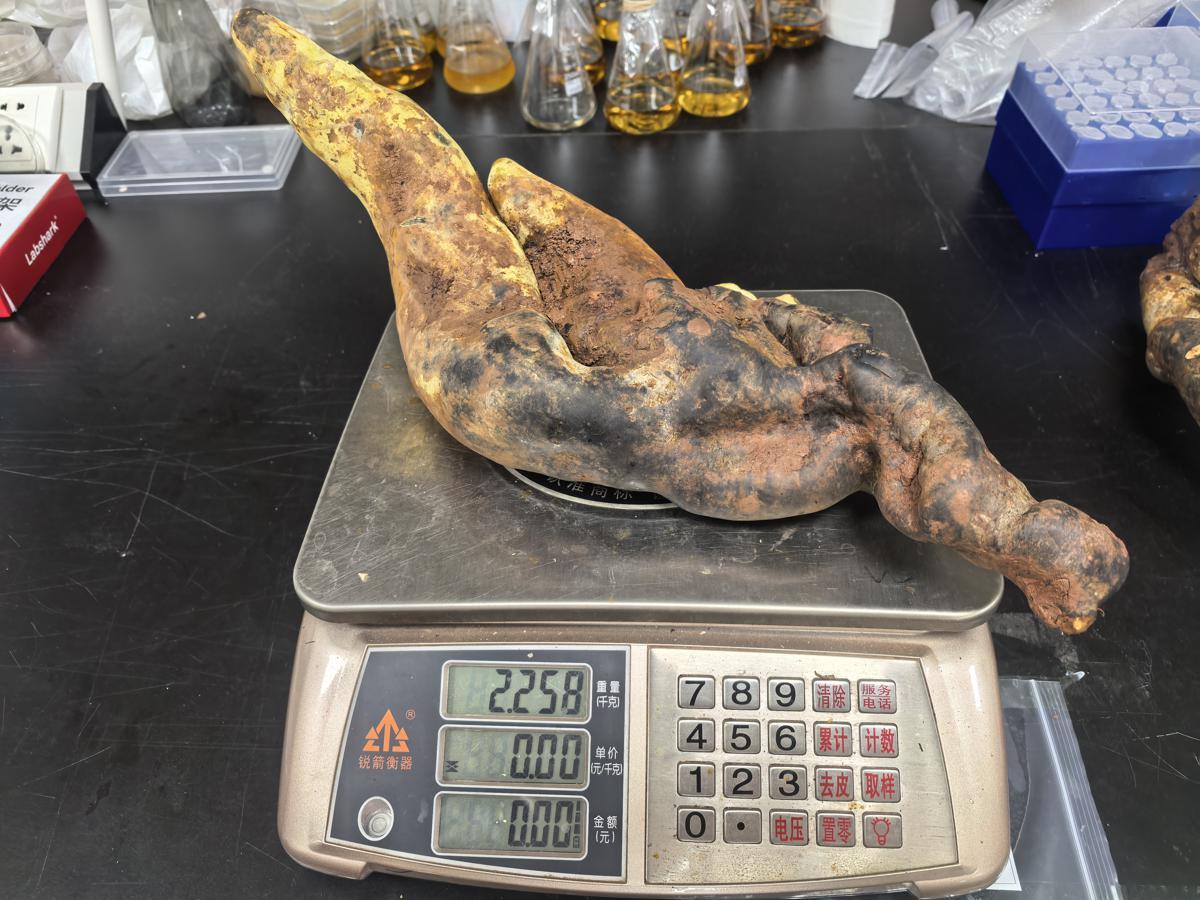
Dianjunus rex can weigh more than 2 kilograms. [Photo/Kunming Institute of Botany under the Chinese Academy of Sciences] Chinese scientists have discovered a previously unknown giant fungus in Yunnan province that constitutes a new fungal family after finding specimens that can grow up to 50 centimeters tall and weigh more than 2 kilograms. Dianjunus rex was identified by a research team led by Yu Fuqiang of the Kunming Institute of Botany under the Chinese Academy of Sciences, together with collaborators. Their findings were recently published in the journal Frontiers in Fungal Biology. The research established an entirely new fungal family, Dianjunaceae, highlighting how much remains unknown about fungal diversity even in a region renowned for its rich plant and animal life, according to the team.
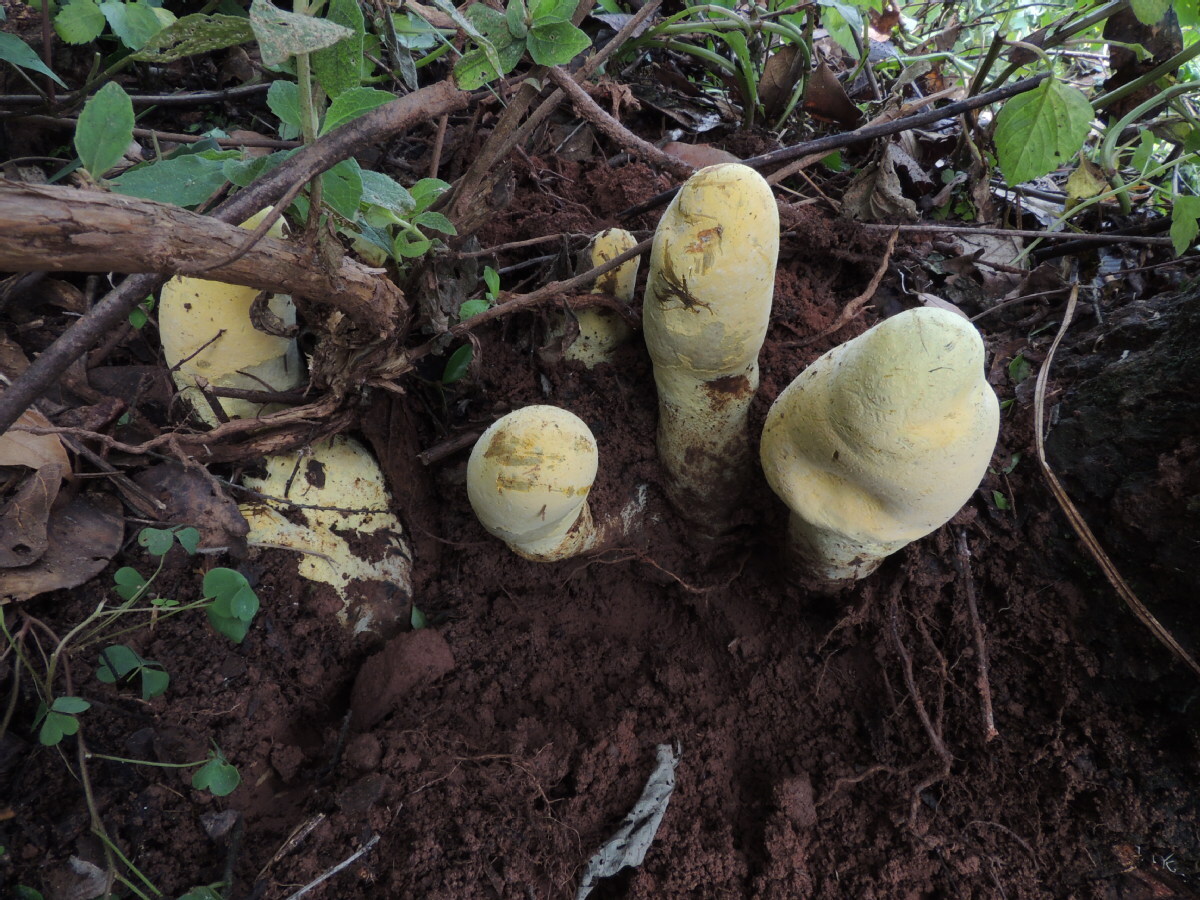
Dianjunus rex growing in a forest. [Photo/Kunming Institute of Botany under the Chinese Academy of Sciences] Researchers collected specimens from tropical and subtropical forests in Yunnan between August 2024 and July 2025. The fungi were found growing from the roots of recently dead trees and surrounding soil. Standing between 20 and 50 centimeters tall, the fungi have thick, upright structures with rounded tops that develop finger-like branches as they mature. Most specimens weighed between 250 and 600 grams, but one unusually large specimen weighed 2.2 kilograms. According to the study, the giant specimen had the largest spore-producing structure ever recorded among fungi belonging to Ascomycota, one of the major groups in the fungal kingdom. The name Dianjunus combines a reference to the ancient Dian Kingdom in Yunnan with the Chinese word for fungus. The species name rex, meaning king in Latin, is also found in Tyrannosaurus rex, a reference to the fungus's unusual size, according to the team. Scientists also traced the newly identified family's origins to around 65 million years ago, shortly after the mass extinction that wiped out non-avian dinosaurs. The estimate suggests the fungus belongs to an ancient evolutionary line that emerged as Earth's ecosystems were recovering.
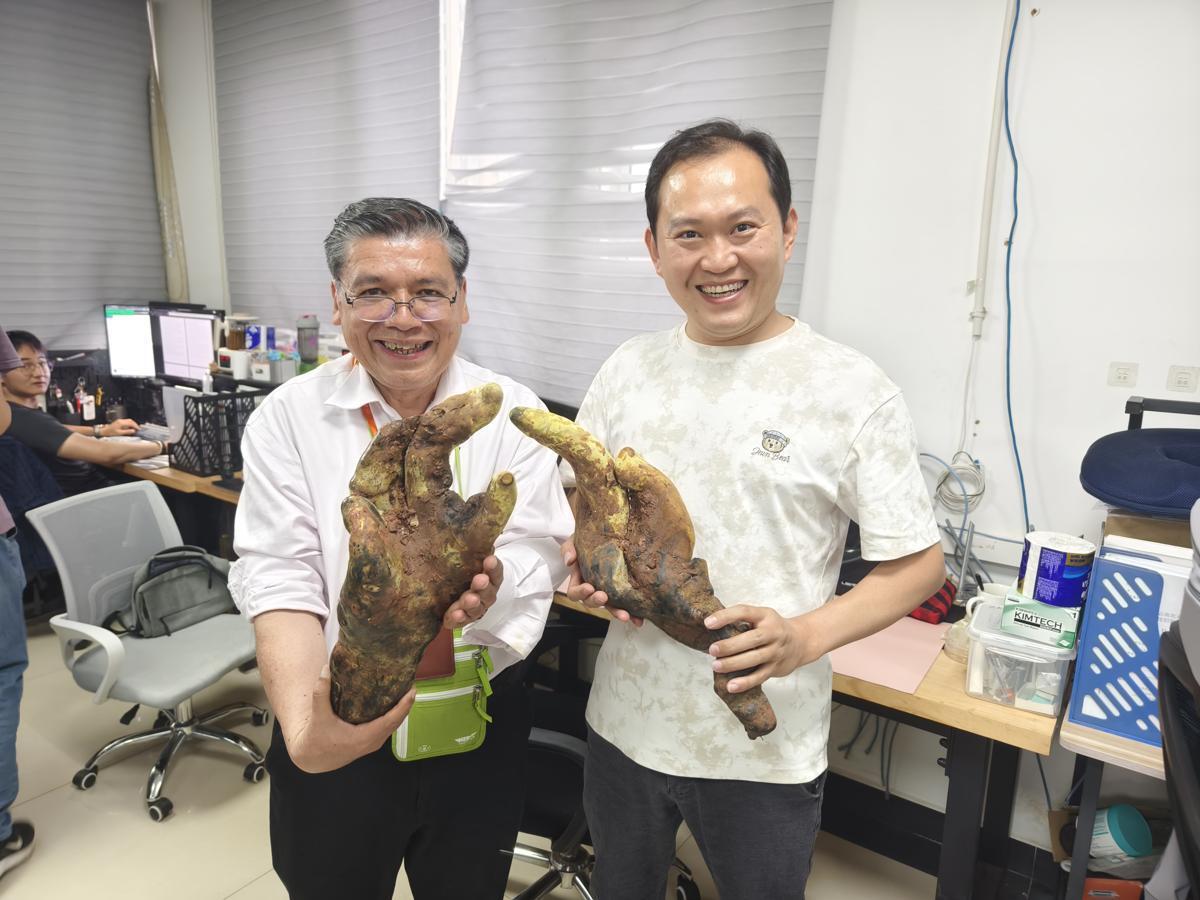
Researchers hold specimens of the newly discovered fungus Dianjunus rex. [Photo/Kunming Institute of Botany under the Chinese Academy of Sciences] Researchers suggest the fungus may lead a "double life", living inside healthy trees before switching to feeding on dead plant material after its host dies. This could allow it to channel more resources into developing its unusually large spore-producing structures, although the hypothesis has yet to be confirmed. More than 6,000 fungal species have been documented in Yunnan, but scientists estimate the province could harbor over 100,000 species, suggesting that many more discoveries remain to be made. (China Daily 2026年10月15日) 来源:https://enapp.chinadaily.com.cn/a/202610/15/AP6ad0a7abe4b01bdced9fcb9e.html |

版权所有 Copyright © 2002-2025 中国科学院昆明植物研究所,All Rights Reserved 【滇ICP备05000394号】
地址:中国云南省昆明市蓝黑路132号 邮政编码:650201
点击这里联系我们